Measurement of radiation dose at ultra-high dose rates for advanced radiotherapy
Challenge
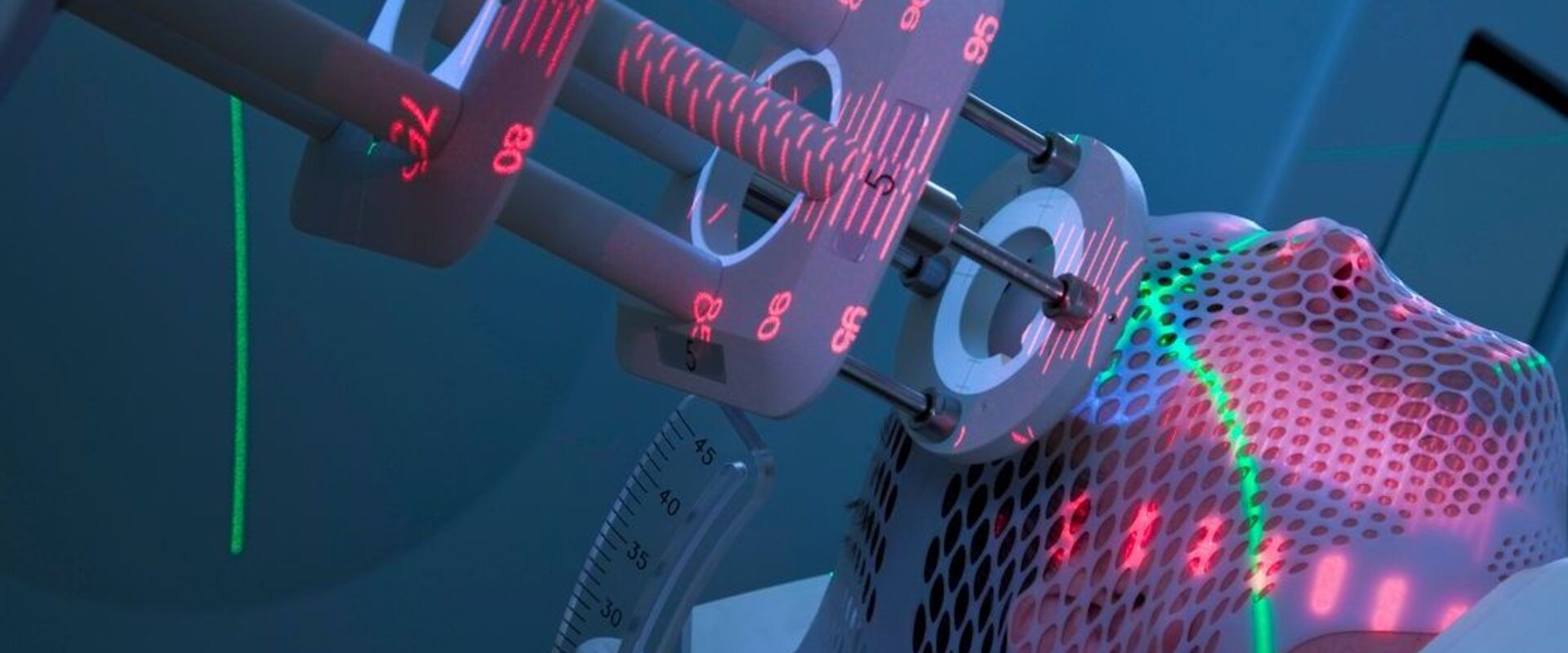
One in two people will get cancer within their lifetime. Radiotherapy (RT) is an important tool used to kill cancer cells, shrink tumours, and relieve symptoms. In this type of treatment, beams of high-energy photons or subatomic particles such as electrons or protons, are delivered to patients using medical accelerators.
Whilst very effective, many patients suffer extreme reactions and to reduce toxicity, treatments are generally given in small doses in several fractions for over a month. The delivery of a fraction takes several minutes at conventional dose rates (delivered radiation dose per time interval).
Recently a new modality of RT has emerged that uses ultra-high dose rates (UHDR). In this case, the total dose is delivered by only a few radiation pulses within a time interval of less than one second. Preclinical trials of this “FLASH” RT have indicated that it possesses a greatly reduced radiation-induced toxicity whilst maintaining an equivalent tumour-kill response.
The “gold standard” dosimeters used to monitor and assess RT beams are air-vented ionisation chambers. The air in the chamber is ionised by the radiation, releasing charge carriers that can be measured to indicate the dosimetric properties of a radiation field from an accelerator. The UHDR pulses in FLASH RT lead to high recombination of the charge carriers and thus considerable measurement deviations with these detectors. Although passive dosimeters – based on alanine or radiation sensitive films – are an alternative they do not provide real-time information and can take hours or days to give results which is impractical in a treatment setting.
Solution
During UHDpulse, project partner PTW and collaborator the University of Rome Tor Vergata developed several dosimeter prototypes based on PTW’s well established microDiamond dosimeter used in conventional RT. The prototypes were validated in three different commercially available UHDR pulsed electron accelerators and under a UHDR electron beam at PTB, the National Metrology Institute (NMI) of Germany. The prototypes demonstrated linear response with respect to dose per pulse and excellent performance for measurements of percentage depth dose curves and lateral beam profiles, as well as for output factors determinations under UHDR conditions. Some prototypes showed a linear response up to 25 Gy per pulse at a pulse duration of 4 μs - even exceeding the dose per pulse range used for FLASH therapy.
Impact
PTW has been a leading company in the area of dosimetry, and quality control in medical radiation for over 100 years with clients from more than 160 countries around the world. The company’s mission is to make radiation safer – and to this aim established its Dosimetry School in 2014, which has seen 1500 attendees since its inception.
PTW now market the new dosimeter developed in UHDpulse as the “flashDiamond” (type 60025) - the first detector that can provide real time information on UHDR FLASH beams. Since the end of the project in 2023 it has already found use in over a dozen laboratories and hospitals around Europe.
The company acknowledge that the access to UHDR beams at the institutions of project partners, and the extensive calibration performed by PTB a leading European NMI, was crucial in validating the performance of the new detector.
The real time dosimetry and quality assurance of FLASH electron beams marks a major step in the establishment of this exciting new form of cancer treatment, which could benefit many cancer patients in the years to come.

- Category
- EMPIR,
- Health,
- New Technologies,