Case Studies

Page 22 of 42.

Ensuring biogas quality for gas grids

Biogas production and its upgrade to biomethane have the potential to reduce Europe’s dependency on imported natural gas. In 2017, 65 000 GWh of biogas generated electricity and 18 000 biogas plants contributed to energy supply diversification. Biogases are produced by digesting a variety of industrial waste streams high in org...

read more

Improved nuclear incident data analysis

High-speed digital data acquisition enables the direct observation of sensor outputs - a major advantage over conventional instrumentation. More compact and less power hungry, the use of this technology in mobile applications is increasing. For example, first responders at major nuclear incidents can check surroundings for cont...

read more
Image showing a Circuit board

A new standard for better 3D chips

The processing power of traditional silicon chips, or integrated circuits, is now reaching its limit. To address this, and the demand for smaller devices, manufacturers are introducing ‘3D’ chips where parts are assembled on top of each other. This additional level of architecture requires new types of measurements to verify th...

read more

Measurements for high speed production

The manufacture of many low-value items is being outsourced to countries outside of Europe. In response European manufacturers are repurposing high-throughput processes, such as printing and injection moulding, to produce high-value devices, recognising the [potential] ‘economy of scale’. Roll-to-roll (R2R) manufacturing is an ...

read more
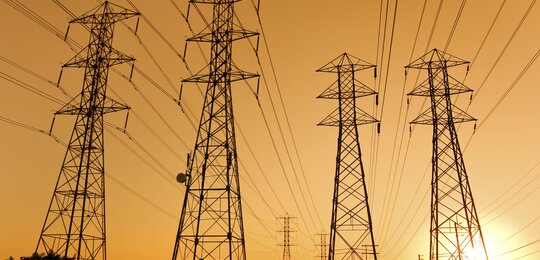
Image showing electrical pylons and power lines

New instrument for high voltage tests

All elements of the high voltage (HV) transmission grid require testing to demonstrate tolerance to such voltages to prevent failure and disruption to electricity supplies. In addition, due to the height of HV lines lightning strikes are common and cause surges of power, or ‘lightning impulses’ (LI), reaching hundreds of kV in ...

read more

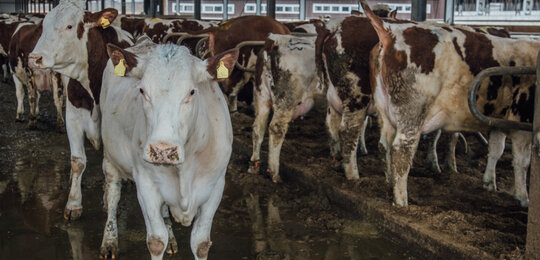
Ammonia monitoring networks

Intensive farming practices, relating to livestock, such as slurry spreading or maintaining herds indoors, are major contributors to ammonia emissions. When released, ammonia can deposit on and damage ecosystems and it can also react with atmospheric gas to produce fine particulate matter (PM2.5) that is hazardous to our health...

read more

Page 22 of 42.
Element 1 Element 2 Element 3 Element 1 Element 1 Element 1 Element 1 Element 1 Logo-Footer