integrated metrology community.

News
EMPIR project improves standards for solar energy
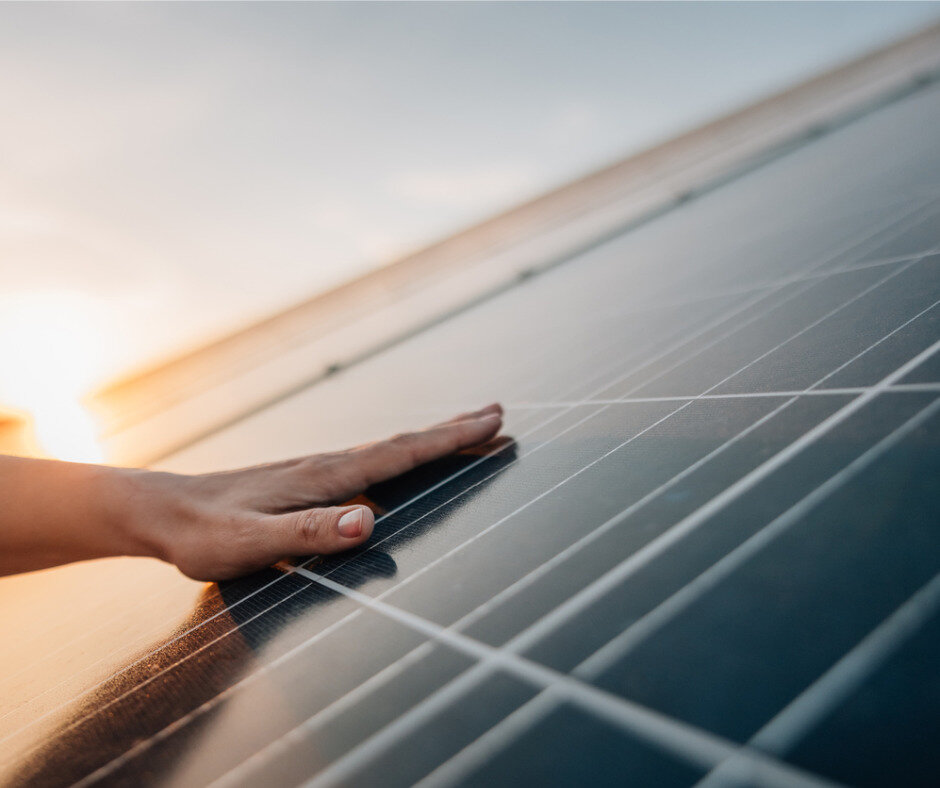
Hand touching solar panels
An EMPIR project has reduced uncertainty in standards for photovoltaic cells through an interlaboratory comparison
The project
Solar energy will be a key factor in cutting fossil fuel use and meeting EU targets around reduced greenhouse emissions. As the use of photovoltaic (PV) cells for solar energy production becomes more accessible and more popular, the need for accurate measurements for all aspects of PV systems will become more and more important. For example, international standards for measuring cell outputs are currently inaccurate for shaded or indoor locations, applications that will become a necessity as PV technology is implemented into the growing ‘Internet of Things’ (IoT).
EMPIR project Metrology for emerging PV applications (19ENG01, Metro-PV) has developed reference devices and measurement procedures to improve the accuracy of power output measurements for photovoltaic cells. This includes a quality metric for measuring output sensitivity in shady locations and methods to measure the performance of PV devices used for IoT applications.
The interlaboratory comparison
The IEC 61853 series covers standardised measurements for PV module energy ratings, in particular the Climate Specific Energy Rating (CSER), which measures the yield of solar devices for standardised annual courses in different climate zones. The CSER considers several characteristics, including angular response and spectral responsivity, procedures for which are included within the IEC 61853 series. However, some steps in these procedures are not rigorously defined, leaving room for interpretation for their implementation.
The project conducted an interlaboratory comparison of the standard, with 10 different implementations of the algorithm used to calculate CSER. Each participant used the same input data and there was found to be a difference of 14.7% between results. Following a series of comparison phases, a best practice approach was defined and resulted in a much-improved difference of below 0.1%. Additionally, the input data and results of the comparison were provided as Open Data to allow for the wider community to test their implementations of the algorithm.
Project co-ordinator Stefan Winter (PTB) has said about the project:
“When comparing solar modules, future operators of PV systems actually do not only want to know how well they perform under unrealistic ideal conditions, but how they behave overall over the course of the year. Through the project’s work, we have clarified the description of the calculation methods for this.”
This EMPIR project is co-funded by the European Union's Horizon 2020 research and innovation programme and the EMPIR Participating States.
Want to hear more about EURAMET?
Information
- EMPIR,
- Energy,
- EMN Clean Energy,

Enabling production of more reliable data and more rigorous assessments of climate change and variability more
Advancing the large-scale energy storage which is required for a shift to renewable energy supply more

Lowering measurement uncertainty and improving SI-traceability more

Stage 1 of the 2026 Call under the European Partnership on Metrology is open to submit potential research ideas more

Extending the performance of digitisers beyond the current state-of-the-art more