integrated metrology community.

ENVIRONMENTAL MONITORING
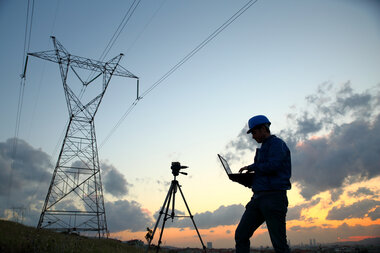
Environmental Monitoring and the periodic or continued measurement and evaluation of environmental parameters such as pollution levels is essential for early identification or prevention of damage to the environment. The EU supports environmental monitoring for example through their environmental radioactivity monitoring programmes. Additionally, environmental monitoring is also vital to achieve the United Nation’s sustainability goal 6 ‘Clean water and sanitation’, which relies on traceable measurement chains to determine pollution level in drinking water.
EURAMET has supported a range of environmental monitoring projects that focused on radiation exposure, the effect of pollutants in the ocean on marine life or pollution levels in the air in cities caused by industry. Additionally, the European Metrology Networks for Climate and Ocean Observation and Pollution Monitoring aim to bring together industrial stakeholders and scientists to further improve the metrological network needed for efficient environmental monitoring.
Many EURAMET projects have supported metrology for environmental monitoring, inlcuding the ones listed below:
RELATED CASE STUDIES
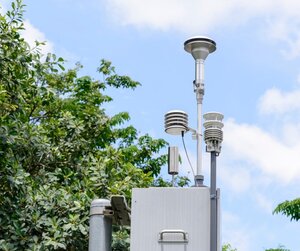
A new facility for ambient-like aerosols
Monitoring pollution is key for protecting public health, as well as understanding and reducing the effects of climate change. However, measurement and calibration methods for monitoring particulate matter in air were either unsuitable or very time-consuming, and there has been a lack of facilities to generate a full range of reference materials for ambient-like aerosols.
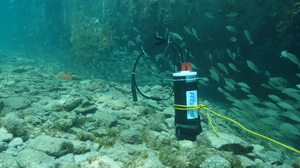
New measurement capabilities to protect the marine environment
Underwater noise from man-made activity, such as shipping or construction work, can have a profound effect on marine organisms such as whales, damaging their hearing or driving them from their native habitats. European directives are in place to protect the most vulnerable species, but no validated calibration methods were available for underwater measurement instruments in the sound range of greatest environmental concern.
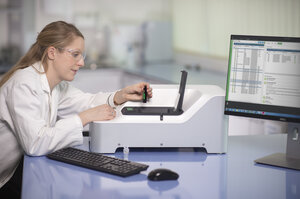
Measuring nanoparticle exposure
Nanoparticles are a subject of intense scientific and technological interest in many industries, from medicine to electronics. The global annual nanomaterials market is already worth about €20 billion, exploiting unusual properties of these tiny, highly functional materials. Some nanoparticles may be toxic but there’s no way to reliably measure exposure. Lack of traceable methods to measure dosage reduced confidence in instrumentation, so impeded the development of new applications.
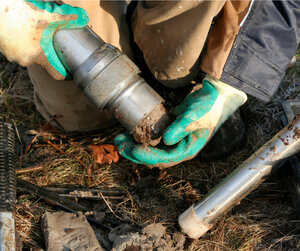
Detecting contaminants in soil
Companies building on sites contaminated by previous industrial use, must first perform soil analyses to identify pollutants. Measurement traceability is underpinned by reference materials that need to closely match real-world samples. Increasing the capability of National Metrology Institutes (NMI) in emerging EU member states to produce these materials and perform proficiency exercises is essential to harmonise SI traceability in environmental monitoring throughout Europe.

Traceability for mercury measurements
Mercury, a highly toxic metal, can be released into the environment from human sources. European and international treaties are in force to limit its emission, introducing the need for reliable mercury monitoring. Cheap and easy to use sensors that can be deployed anywhere in the world and capable of operating without power supplies are needed for monitoring atmospheric mercury levels.
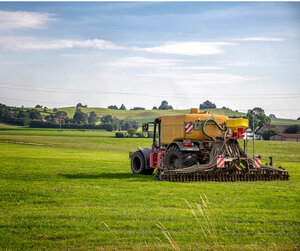
Developing the technology to accurately measure ammonia
Ammonia, a highly reactive gas, has been linked to severe health effects. As it can be absorbed by components in measurement instruments, its atmospheric levels are hard to monitor accurately. Most emissions are from agriculture thus monitors need to be field-deployable, but the data these provide can be influenced by environmental conditions. Improved instrumentation is required to meet emission targets and protect the environment.
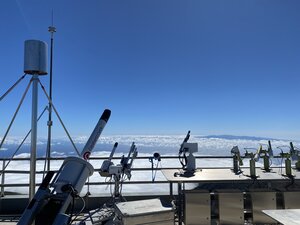
Improving the measurements used to protect atmospheric ozone
Atmospheric ozone protects the Earth from harmful UV radiation. However, human activity has depleted atmospheric levels, weakening this ‘protective 'shield’. Spectrophotometers which measure ozone are based on designs from the 1970s and 1980s, while instrumentation offering the potential for improved measurements lacked metrological verification for the long-term monitoring and accuracy required to help protect this important molecule.
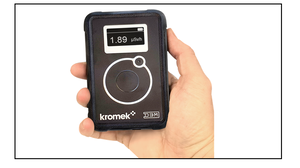
Mobile radiation detectors for public security
Accurately detecting ionizing radiation is essential in the event of a nuclear incident, in the prevention of terrorism and the smuggling of radioactive materials. However, static or ‘fixed’ radiation detectors can be side-stepped or fail. Mobile detectors capable of networking together offered the possibility of significantly extending real-time coverage of radioactive threats but lacked validation in Europe, hindering deployment.
RELATED NEWS STORIES
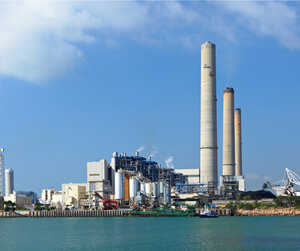
EMPIR project on air pollutant research helps compliance with emission limits
Project consortium invited to present on standardised pollutant measurements to meet the requirements of current and future air quality regulations.
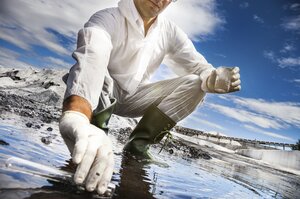
EMPIR Capacity Building project enables analysis of environmental materials
Joint research project extends environmental pollution monitoring capabilities for water and soil to new European countries.

EMPIR project develops new radon sources to improve exposure measurements and greenhouse gas tracing
The sources will improve atmospheric transport models which can be used to track both radon and greenhouse gases.

Partnership project makes progress towards protecting the Earth’s fragile ozone shield
Developing the first metrological framework to assess the impact of cosmic rays and human activity on the ozone layer.

EMPIR radon metrology research leads to licence agreement
In May 2023 a License Agreement for an atmospheric radon monitor was signed between the company Radonova and the Universitat Politècnica de Catalunya.